



September 9, 2026
Why Is the Fridge Not Cooling but the Freezer Works?
When the fridge not cooling but freezer works, the problem can seem confusing. The freezer may keep food frozen while the refrigerator section feels warm or only slightly cool. This situation is common in many modern refrigerators because both compartments share the same cooling system but use different airflow paths.
The freezer usually produces the cold air, while fans and vents move that air into the refrigerator compartment. If something blocks this airflow, the freezer can continue working normally while the fridge struggles to stay cold.
Before calling a technician, you can check several simple causes. A blocked vent, dirty condenser coils, incorrect temperature settings, faulty fans, or excessive frost can all affect refrigerator cooling.
Could Blocked Air Vents Cause the Fridge to Stay Warm?
Yes, blocked air vents are one of the easiest problems to check. Refrigerators use vents to circulate cold air from the freezer into the fresh-food compartment. When food containers, bottles, or bags cover these vents, cold air cannot move freely.
Open the refrigerator and look for vents along the back wall or near the top. Move large food items away from them and leave enough space for air to circulate.
Avoid filling the refrigerator too tightly. A packed fridge can restrict airflow and create uneven temperatures. Keep some space between containers so cold air can reach different areas.
Can a Frosted Evaporator Cause This Cooling Problem?
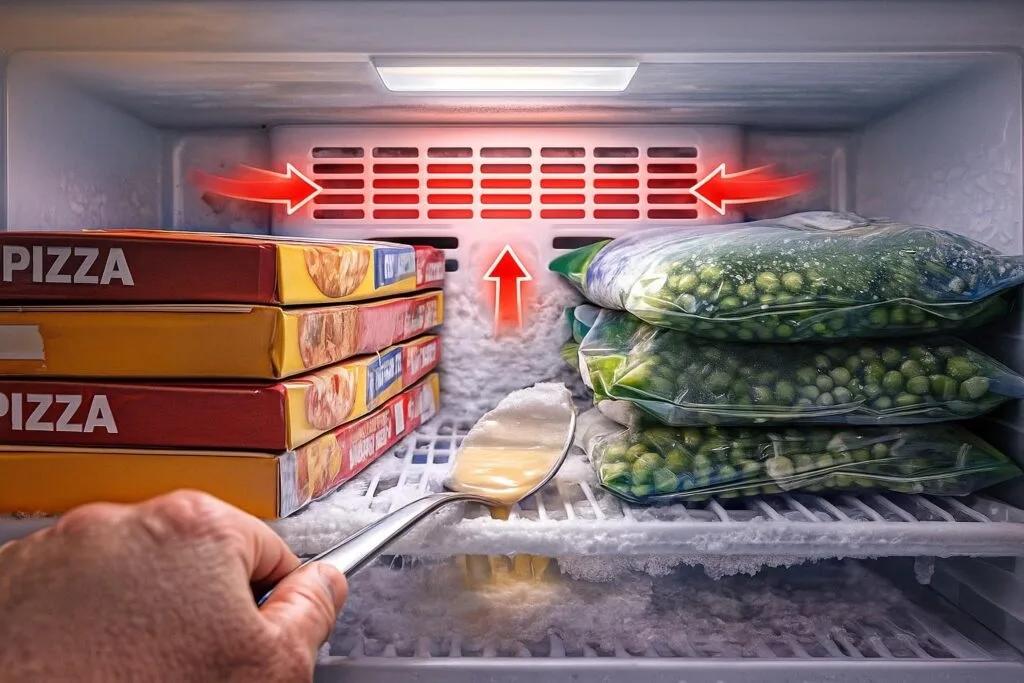
Excessive frost can also explain why the fridge not cooling but freezer works. The evaporator coil sits behind a panel in many refrigerator models. The coil becomes cold and helps create the chilled air that circulates through the appliance.
If frost covers the coil, air cannot pass through it effectively. The freezer may still appear cold, but the refrigerator section may gradually become warmer.
A faulty defrost heater, thermostat, sensor, or control component can cause repeated frost buildup. If you notice thick ice around the freezer’s rear panel, avoid repeatedly scraping it with a sharp object. Doing so can damage important components.
Could a Dirty Condenser Coil Affect Refrigerator Cooling?
Your refrigerator needs to release heat to operate properly. Condenser coils help transfer heat away from the appliance. When dust and dirt accumulate on these coils, the refrigerator may have to work harder.
Dirty coils can reduce cooling performance and increase energy consumption. If your model allows safe access to the coils, unplug the refrigerator before cleaning. Use a suitable coil brush or vacuum to remove loose dust.
Always follow the manufacturer’s cleaning instructions because coil placement differs between refrigerator designs.
Is the Evaporator Fan Responsible for the Problem?
The evaporator fan helps move cold air through the refrigerator. If the fan stops working, the freezer may remain cold while the refrigerator compartment receives too little chilled air.
You may hear a fan running when the refrigerator operates. However, unusual clicking, grinding, or silence when the fan should be operating can indicate a problem.
Do not place your hands near moving components. If you suspect a faulty fan motor, sensor, or wiring, professional service can help identify the exact cause.
Could the Refrigerator Temperature Setting Be Wrong?
Sometimes the issue comes from an incorrect temperature setting rather than a mechanical failure. Check the refrigerator control panel and confirm that the fresh-food compartment has an appropriate setting.
Avoid setting the refrigerator extremely warm. At the same time, extremely cold settings can increase frost buildup and restrict airflow in some situations.
After adjusting the temperature, give the refrigerator enough time to stabilize. Large temperature changes do not happen instantly, so avoid repeatedly changing the controls.
Can a Damaged Door Seal Let Cold Air Escape?
A refrigerator door gasket creates a seal around the compartment. If the gasket becomes cracked, loose, dirty, or deformed, warm air can enter while cold air escapes.
Inspect the gasket around the entire door. Clean dirt and food residue from the sealing surface. Make sure the door closes completely and does not remain slightly open because of a container or shelf.
You can also check whether the gasket sits evenly against the refrigerator cabinet. A damaged gasket may require replacement.
How Can You Check Whether the Refrigerator Door Is Closing Properly?
A door that does not close correctly can cause continuous cooling problems. Check the shelves for oversized containers that prevent the door from closing.
Also inspect the refrigerator’s position. If the appliance sits unevenly, the door may not seal correctly. Follow the manufacturer’s leveling instructions rather than making random adjustments.
Keep the refrigerator away from excessive heat sources when possible. High surrounding temperatures can also make cooling more difficult.
How Does the Water Filter Relate to Refrigerator Maintenance?
Many modern refrigerators include a built-in water dispenser and ice maker. Although a water filter does not normally control refrigerator cooling, regular filter replacement remains an important part of appliance maintenance.
If you are also searching for how to change fridge water filter, start by checking your refrigerator’s user manual. Filter designs vary considerably between brands and models.
Generally, the process involves:
- Locate the water filter compartment.
- Turn off or release the filter according to the manufacturer’s instructions.
- Remove the old filter.
- Unpack and install the replacement filter.
- Lock the new filter into position.
- Run water through the system if the manufacturer recommends flushing it.
- Reset the filter indicator if your refrigerator has one.
Never force a filter into place. If it does not fit, verify that you purchased the correct replacement.
What Should You Check When the Fridge Is Warm but the Freezer Is Cold?
A simple troubleshooting routine can help you narrow down the cause:
- Check the refrigerator temperature setting.
- Make sure vents are not blocked.
- Look for excessive frost inside the freezer.
- Listen for unusual fan noises.
- Inspect the door gasket.
- Clean accessible condenser coils.
- Make sure the refrigerator has enough ventilation around it.
- Check whether the door closes completely.
- Allow adequate time for the refrigerator to cool after making adjustments.
This approach can help you identify simple issues without immediately replacing parts.
When Should You Call a Refrigerator Technician?
If basic checks do not solve the problem, professional inspection may be necessary. A technician can test components such as the evaporator fan, condenser fan, defrost system, temperature sensors, control board, and sealed cooling system.
Avoid attempting refrigerant repairs yourself. Refrigeration systems require specialized equipment and proper handling. Electrical components can also present safety risks.
If the compressor runs continuously, the refrigerator makes unusual noises, the freezer develops heavy frost repeatedly, or the refrigerator remains warm despite normal airflow, arrange professional service.
How Can You Prevent Future Refrigerator Cooling Problems?
Regular maintenance can reduce the chance of cooling problems. Keep vents clear, clean accessible coils periodically, check the door gasket, and avoid overloading the refrigerator.
Follow the manufacturer’s recommended temperature settings and replace water filters according to the recommended schedule. Keep an eye on unusual sounds or changes in cooling performance. Early attention can prevent a small problem from becoming a major repair.
Fridge Mentor can help homeowners understand common refrigerator problems and approach basic troubleshooting with greater confidence. However, always follow the appliance manufacturer’s instructions for model-specific maintenance.
What Is the Best Way to Solve a Fridge Cooling Problem?
When the fridge not cooling but freezer works, start with simple airflow and maintenance checks. Blocked vents, frost buildup, dirty coils, poor door sealing, incorrect settings, and fan problems are common possibilities.
If these checks do not restore normal cooling, avoid guessing which replacement part you need. Professional diagnosis can identify the actual fault and prevent unnecessary repairs.
Regular maintenance also makes a difference. Cleaning, proper food placement, good airflow, correct temperature settings, and timely filter replacement can help your refrigerator operate efficiently.
With the right troubleshooting approach, you can often identify the reason behind the cooling problem and decide whether you can handle it yourself or need professional assistance. Fridge Mentor provides practical guidance so you can make that decision more confidently.