

September 19, 2026
How Does a Soft Robotic Gripper Improve Automation?
Automation continues to transform manufacturing, logistics, food processing, healthcare, and many other industries. As businesses look for safer and more flexible automation solutions, traditional robotic systems often face challenges when handling delicate, irregular, or fragile objects. A Soft robotic gripper offers a practical solution by combining robotic precision with flexible gripping technology.
Unlike rigid robotic claws, soft grippers use flexible materials that can adapt to the shape and surface of different objects. This flexibility allows robots to handle products with less risk of damage. Soft gripping technology can therefore improve productivity while expanding the range of tasks that robots can perform.
What Is a Soft Robotic Gripper?
A Soft robotic gripper is a robotic end-effector designed to pick up and manipulate objects using flexible materials. Instead of relying on hard mechanical fingers, these grippers can use silicone, elastomers, pneumatic systems, or other compliant materials.
The flexible structure allows the gripper to conform to an object’s shape. As a result, the robot can handle items that vary in size, texture, weight, and geometry.
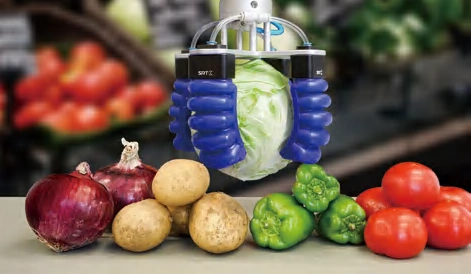
For example, a conventional robotic claw may struggle to pick up a soft fruit without leaving marks. A soft gripper can gently surround the fruit and distribute pressure across its surface. This makes Soft gripping useful in applications where product quality matters.
How Does Soft Gripping Make Robots More Flexible?
One of the biggest advantages of Soft gripping is adaptability. Traditional grippers often require specific finger designs for specific objects. When the product changes, manufacturers may need to replace or adjust the gripper.
Soft grippers reduce this limitation. Their flexible fingers can deform around objects and maintain contact across different surfaces. This enables one gripper to handle multiple products in the same production environment.
For businesses, this flexibility can simplify automation. Manufacturers can use robotic systems for a wider range of products without constantly changing mechanical tooling.
How Does a Soft Robotic Gripper Protect Delicate Products?
Many industries work with products that can easily become damaged during handling. Food, agricultural products, consumer goods, medical items, and lightweight components require careful movement.
A Soft robotic gripper applies force more gently than many rigid gripping systems. Its compliant material can absorb some of the contact pressure and adjust to the object during movement.
This reduces the possibility of crushing, scratching, or deforming products. In food processing, for instance, gentle gripping can help maintain the appearance and quality of fruits, vegetables, baked goods, and other fragile items.
By reducing handling damage, companies can also reduce product waste and improve overall production efficiency.
Can Soft Robotic Grippers Handle Different Shapes and Sizes?
Yes, flexibility allows soft grippers to handle objects with different shapes and dimensions. A rigid gripper typically depends on fixed contact points. A soft gripper can adapt its fingers or gripping surface as it contacts an object.
This capability becomes particularly valuable in industries where product variations are common. A single production line may need to handle small packages, irregular components, or products with curved surfaces.
With effective Soft gripping, the robotic system can adjust naturally to these variations. This helps businesses automate tasks without creating a separate gripping system for every product type.
How Can a Soft Robotic Gripper Improve Production Speed?
Automation aims to increase output while maintaining consistent quality. A Soft robotic gripper can contribute to this goal by performing repetitive picking and placing tasks continuously.
Robots do not experience the same fatigue associated with repetitive manual handling. When integrated correctly, they can operate for extended production cycles and maintain consistent movement patterns.
Soft grippers also reduce the need for frequent manual intervention when handling different product shapes. This can help manufacturers maintain smoother workflows and reduce interruptions.
Companies can therefore combine robotic speed with flexible handling to create more efficient production processes.
Why Is Soft Gripping Useful in Food Processing?
Food processing presents unique automation challenges because products can be fragile, irregular, and sensitive to pressure. Conventional robotic claws may damage certain foods or struggle with products that vary in shape.
Soft gripping provides a gentler alternative. Flexible fingers can surround products without applying excessive localized force. This makes the technology suitable for applications such as sorting, packing, picking, and transferring food products.
The ability to handle different food shapes can also reduce the need for complex mechanical adjustments. As automation technology develops, soft grippers can help food businesses improve efficiency while maintaining product quality.
How Can Soft Robotic Grippers Support Safer Automation?
Safety remains an important consideration when introducing robots into workplaces. Rigid mechanical components can create hard contact points, particularly when robots operate near workers.
A Soft robotic gripper uses compliant materials that can deform when they encounter an object. This property can make certain robotic applications more suitable for collaborative environments, although complete system safety still depends on the robot, sensors, controls, speed, workspace, and overall application design.
Soft grippers can also reduce the risk of damaging products or equipment during accidental contact. Businesses can combine compliant gripping technology with appropriate safety systems to create more controlled automation environments.
Can Soft Robotic Grippers Reduce Automation Costs?
The total cost of automation depends on several factors, including equipment, installation, programming, maintenance, tooling, and production requirements.
A flexible gripper can potentially reduce tooling complexity because one device may handle several types of products. Businesses may not need to purchase a separate rigid gripper for every product variation.
In addition, reduced product damage can help lower waste. Faster handling and fewer manual interventions may also improve operational efficiency.
However, businesses should evaluate the complete automation system rather than focusing only on the gripper’s initial cost. The right solution should match the application’s handling requirements, production volume, and product characteristics.
How Does Soft Robotics Inc Support Modern Automation?
Companies developing advanced robotic handling solutions continue to explore new ways to make automation more adaptable. Soft Robotics Inc has helped bring soft robotic gripping concepts into industrial applications, demonstrating how compliant gripping technology can address handling challenges that traditional systems may find difficult.
The broader development of soft robotics focuses on combining flexible materials, robotic control, sensing, and intelligent automation. These technologies can help robots interact with objects in a more adaptable way.
As industries demand more flexible automation, solutions based on Soft gripping can play an increasingly important role in production environments.
What Industries Can Benefit From a Soft Robotic Gripper?
A Soft robotic gripper can support automation across many industries. Food and beverage companies can use flexible gripping for product handling and packaging. E-commerce and logistics operations can use it for picking and sorting packages.
Manufacturers can also apply soft grippers to consumer goods, electronics, agricultural products, and other items that require flexible handling.
Healthcare and laboratory applications may also benefit from gentle object manipulation. The exact suitability depends on factors such as object weight, surface properties, cleanliness requirements, gripping force, and operating conditions.
This wide range of applications makes soft robotics an important area of modern automation development.
What Should Businesses Consider Before Choosing a Soft Gripper?
Businesses should first identify the objects the robot needs to handle. Product size, weight, shape, texture, fragility, and surface characteristics all influence gripper selection.
Companies should also consider the required gripping force, operating speed, cycle time, environmental conditions, and cleaning requirements. Integration with robotic arms, sensors, control systems, and existing production equipment also matters.
Testing different gripping approaches can help businesses determine whether a particular Soft gripping solution can achieve reliable performance.
Soft Robotics Inc represents the type of specialized technology provider that has helped advance flexible robotic handling. Businesses evaluating these systems should focus on how well the complete solution matches their specific production requirements.
How Will Soft Robotic Grippers Shape the Future of Automation?
The future of automation will require robots to handle increasingly diverse products and work in more flexible environments. Traditional rigid tooling remains valuable, but soft robotics offers another approach for applications that require adaptability and gentle handling.
A Soft robotic gripper can help robots pick up irregular objects, protect delicate products, and adapt to changing production requirements. At the same time, advances in sensors, artificial intelligence, machine vision, and robotic control can further improve gripping performance.
As these technologies develop, Soft gripping can help businesses create automation systems that are more flexible, efficient, and capable of handling real-world variation.
Ultimately, soft robotic grippers improve automation by giving robots a more adaptable way to interact with physical objects. Their combination of flexibility, gentle handling, and automation can help businesses expand robotic capabilities while improving productivity and product protection.